


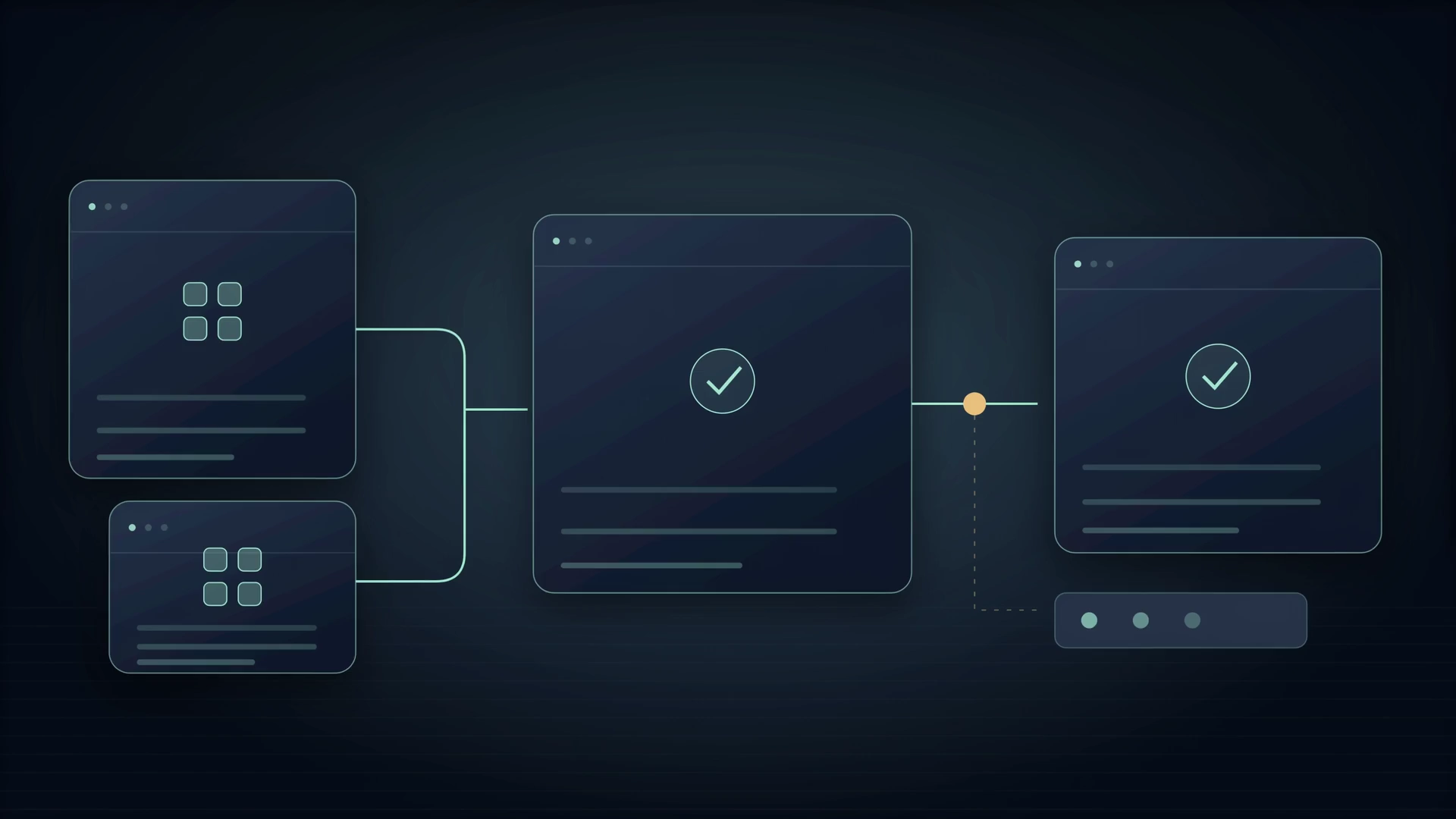
Configure a product
Start with proven product capabilities, your approved information and a defined operating owner. Confirm the required features and plan during discovery.
Intelligence for the way you work.
Connect the products. Move the work forward.
Find your next advantage.
Connect discovery, stock, orders, returns and store operations. Build a consistent experience across digital channels and physical locations, with AI grounded in the systems that actually know what is available.
For retailers, ecommerce businesses, franchise groups and mall operators.
See how an agent can work with business systems while keeping permissions and people in the loop.
Read the request, retrieve the relevant context and prepare a structured task for the agreed workflow.
Read the request, retrieve the relevant context and prepare a structured task for the agreed workflow.
Message, form or business event → A structured task with required fields
Validate the details and permitted actions. Route exceptions and sensitive decisions to the accountable person.
Task + business rules + permissions → Approved action or a review request
Write through a configured integration, check the response and retain an action record. A failed update stays visible.
Authorized action → Confirmed system response + audit trail
Choose a workflow and inspect the sources, intelligence, review and outcome. These are engineering examples to scope with your team.
A customer has a useful buying question but the answer is disconnected from current product and order information.
Approved catalogue details, availability source and order identifiers.
Echo · product catalogue · ecommerce · OMS
An observed queue is not a sale; a recommendation is not a stock reservation. Business-system confirmations remain visible.
Adopt a product where it fits. Connect it to approved systems. Build a tailored application when the workflow needs more.
Start with proven product capabilities, your approved information and a defined operating owner. Confirm the required features and plan during discovery.
Map identifiers, permissions, API actions and error paths. Keep the source of truth clear and design an accountable handoff when a system is unavailable.
Create the portals, mobile experiences, data pipelines and operational interfaces your organisation needs. AI Squad can bring product, design and engineering into one delivery team.
Inputs, dependencies and review points remain visible. The measures below are evaluation criteria for your pilot, not claimed customer results.
A customer has a useful buying question but the answer is disconnected from current product and order information.
Return requests move between support, the store and the warehouse without consistent evidence.
Footfall and queue observations are isolated from staffing, trading hours and store activity.
We scope the users, systems and decisions first. A pilot produces a working flow, review criteria and a rollout decision—not a promise that every integration is already available.
Scope the first workflowOne customer journey or store workflow to improve
Catalogue, stock and order sources with agreed update timing
Return, pricing and escalation rules approved by the business
Workflow map · integration contract · test cases · review roles · rollout and support ownership. Scope and timing are agreed after discovery.
Yes, the starting point is your existing operation. Discovery checks API access, identifiers, authentication and data quality. Where a system cannot support a required action, we agree a safe handoff or a separate integration scope.
It can combine both. We identify the product capabilities that fit, the configuration required and the engineering work needed around them. Your proposal separates these responsibilities and deliverables.
Agree a baseline, representative test cases, source quality and acceptance criteria before rollout. Review incorrect outputs, failed actions and human effort as well as speed. Expand only when the responsible team accepts the result.