


Configure a product
Start with proven product capabilities, your approved information and a defined operating owner. Confirm the required features and plan during discovery.
Intelligence for the way you work.
Connect the products. Move the work forward.
Find your next advantage.
Connect enquiries, appointments, documents and administrative work so patients and staff can reach the right next step. Our focus here is the service and operational journey around clinical care.
For clinic groups, hospital administration, patient services and healthcare operations.
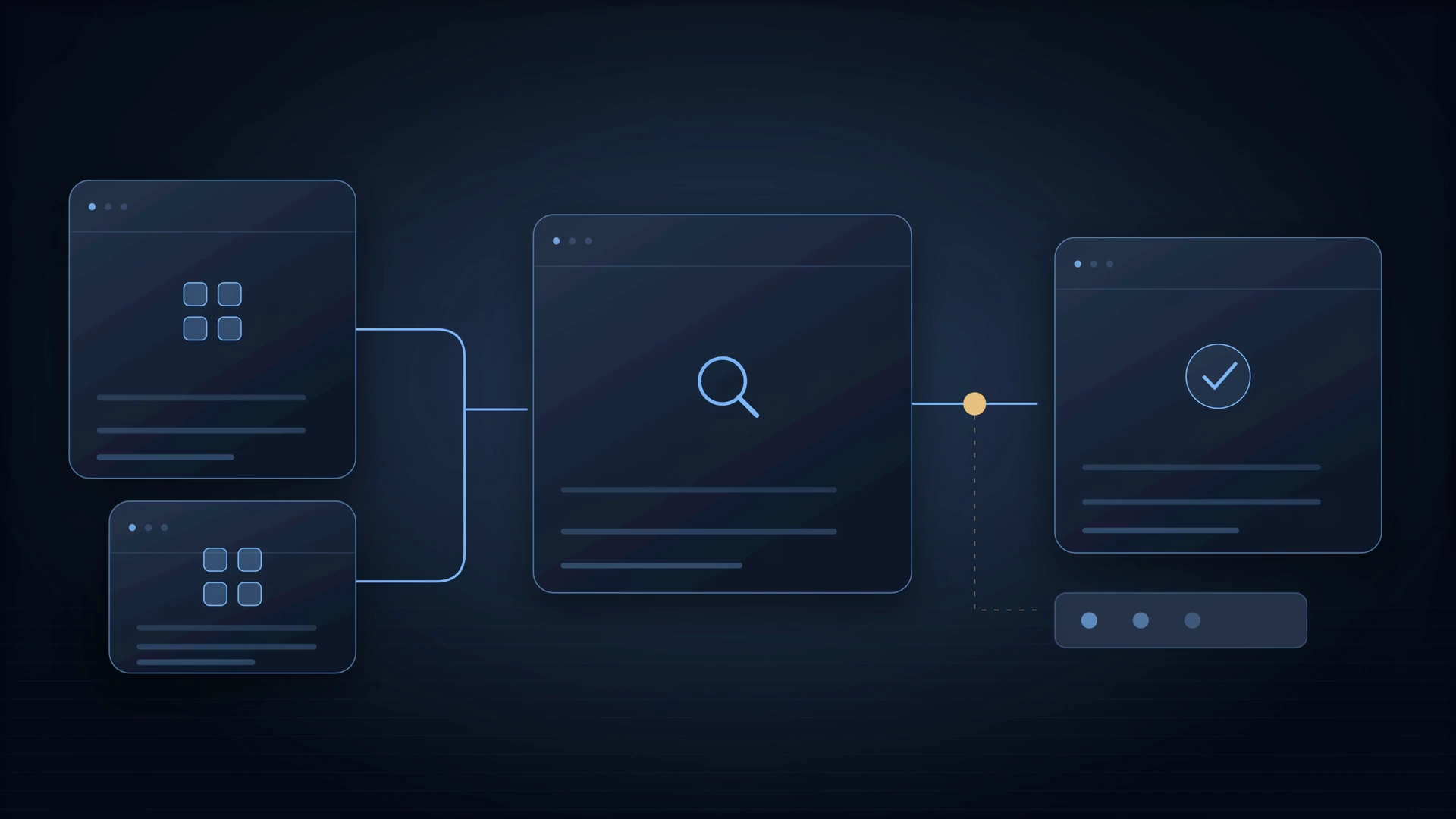
Follow a question from trusted sources to an answer your team can inspect.
Select the documents, records and permissions the assistant can use. Freshness and access are part of the design.
Select the documents, records and permissions the assistant can use. Freshness and access are part of the design.
Approved documents + access rules → A permission-aware knowledge collection
Find relevant passages for the question. Keep the source attached so the answer can be checked.
A customer or employee question → Relevant passages with source references
Present a grounded response, show the sources and hand off when the available evidence is not enough.
Retrieved evidence + conversation context → A reviewable answer and a clear next step
Choose a workflow and inspect the sources, intelligence, review and outcome. These are engineering examples to scope with your team.
Patients wait for basic service answers or repeat their details to request a suitable appointment.
Approved location, service and preparation information plus scheduling rules.
Echo · scheduling · patient-service CRM
These are administrative workflows. Diagnosis, clinical triage, treatment and emergency response stay with qualified healthcare professionals and approved channels.
Adopt a product where it fits. Connect it to approved systems. Build a tailored application when the workflow needs more.
Start with proven product capabilities, your approved information and a defined operating owner. Confirm the required features and plan during discovery.
Map identifiers, permissions, API actions and error paths. Keep the source of truth clear and design an accountable handoff when a system is unavailable.
Create the portals, mobile experiences, data pipelines and operational interfaces your organisation needs. AI Squad can bring product, design and engineering into one delivery team.
Inputs, dependencies and review points remain visible. The measures below are evaluation criteria for your pilot, not claimed customer results.
Patients wait for basic service answers or repeat their details to request a suitable appointment.
Missing paperwork creates repeated calls and delays in administrative review.
Teams cannot easily compare demand, appointment utilisation and service bottlenecks.
We scope the users, systems and decisions first. A pilot produces a working flow, review criteria and a rollout decision—not a promise that every integration is already available.
Scope the first workflowApproved service information and escalation contacts
Booking rules and a confirmed scheduling integration
Access, sensitive-data handling and retention decisions
Workflow map · integration contract · test cases · review roles · rollout and support ownership. Scope and timing are agreed after discovery.
Yes, the starting point is your existing operation. Discovery checks API access, identifiers, authentication and data quality. Where a system cannot support a required action, we agree a safe handoff or a separate integration scope.
It can combine both. We identify the product capabilities that fit, the configuration required and the engineering work needed around them. Your proposal separates these responsibilities and deliverables.
Agree a baseline, representative test cases, source quality and acceptance criteria before rollout. Review incorrect outputs, failed actions and human effort as well as speed. Expand only when the responsible team accepts the result.