
AI & connected operations
Know what is ready to rely on.
Define how an AI application should behave, test it against representative tasks and make its operating boundaries visible. We design evaluation sets, review flows, access controls and release checks around the actual use case.
SEE HOW THE TECHNOLOGY WORKS
From request to a controlled action.
See how an agent can work with business systems while keeping permissions and people in the loop.
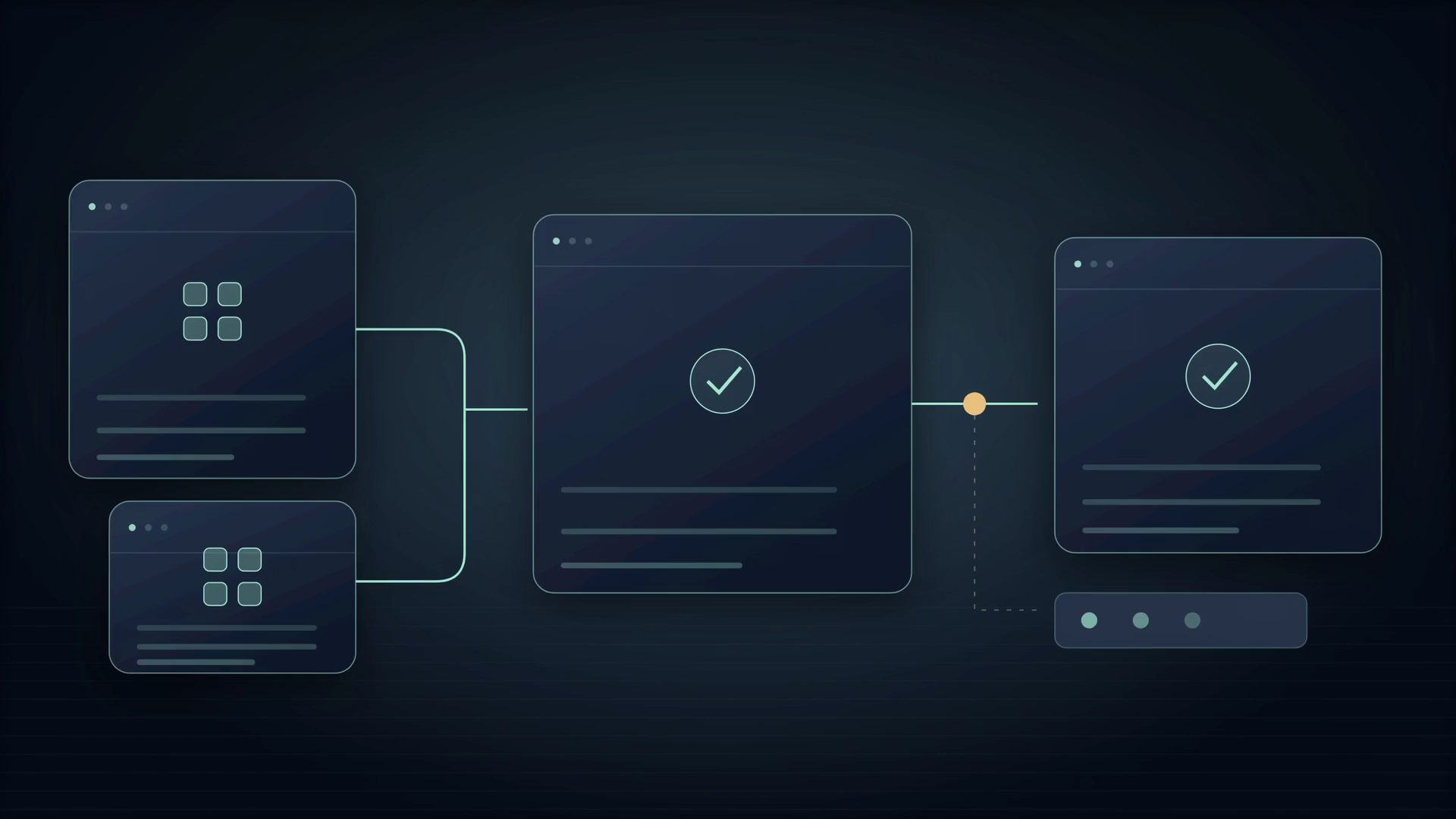
INTERACTIVE WORKFLOWIllustrative engineering scenario
01 / 03
Understand the request
Read the request, retrieve the relevant context and prepare a structured task for the agreed workflow.
Message, form or business eventA structured task with required fields
Read the complete workflow
Understand the request
Read the request, retrieve the relevant context and prepare a structured task for the agreed workflow.
Message, form or business event → A structured task with required fields
Check and approve
Validate the details and permitted actions. Route exceptions and sensitive decisions to the accountable person.
Task + business rules + permissions → Approved action or a review request
Update the system
Write through a configured integration, check the response and retain an action record. A failed update stays visible.
Authorized action → Confirmed system response + audit trail
Controlling agent tools and approvals
Preparing an AI workflow for operational ownership
FROM INPUT TO USEFUL OUTPUT
Follow the work. Inspect the result.
Explore a proposed delivery workflow. Each step connects an activity to something your team can review.
WORKFLOW BLUEPRINTIllustrative delivery design
INPUTS TO DEFINE
Intended users, tasks and risk boundaries
Representative evaluation material
Model, tool and data access design
REVIEWABLE OUTPUT
An evaluation and control specification
Specify intended tasks, prohibited actions and escalation boundaries. Agree examples of success, failure and uncertainty with domain owners.
Reviewed against agreed requirementsWHAT WE DEFINE AND DELIVER
Practical artifacts. A shared definition of done.
The exact scope follows discovery. These are the building blocks we discuss, specify and review together.
- Task-specific evaluation and failure cases
- Access and action-permission design
- Human review and incident workflows
- Release evidence and operating playbooks
HOW THE PIECES CONNECT
Architecture with your operation in mind.
Task and risk definitions connect to test datasets, application traces, permission controls and release decisions. Evaluation is tied to a version and a defined operating scope.
Designed around real constraints.
- Evaluation supports a release decision; it does not certify universal correctness or replace an independent assessment required by the buyer.
- This service is engineering and operational design, not a legal opinion, regulatory approval or certification claim.
FIND THE RIGHT STARTING POINT
A product where it fits. A custom build where it matters.
Translate expectations into tests, controls and operating responsibilities that can be inspected before release and revisited after changes.
Bring your objective and the people it should help. We will shape a first scope and the evidence needed to move forward.
Discuss this projectYour starting point is carried into an editable inquiry. Nothing is booked or provisioned by making this selection.A CLEAR PATH THROUGH DELIVERY
One plan. Visible progress.
A complete build, a focused integration or specialists alongside your team. The engagement follows the scope—not a fixed team template.
- 01
Discover
Define users, the process, constraints and a useful first measure of success.
- 02
Design
Make the interface, architecture, data and integration decisions visible.
- 03
Build & evaluate
Deliver working increments and test the task, permissions and difficult cases.
- 04
Release & evolve
Agree rollout, recovery, handover and the people responsible for ongoing operation.
BEFORE YOU START
Good questions. Clear answers.
Can you evaluate an application we already built?
A scoped engagement can review an existing workflow when representative access, test inputs and operating requirements are available.
Does adding a guardrail make a system safe automatically?
No single control establishes that. Evaluation examines the whole workflow, including data access, actions, failure handling and the people responsible for review.
LET’S MAKE THE NEXT STEP USEFUL
Tell us what needs to work better.
Talk with our team
Explore with our AI guide, or reach the people who can scope the work.