


AI & connected operations
Make your systems work as a team.
Design agents and workflows that connect information to action. Integrate existing enterprise systems, route approvals and give people control at the moments that matter.
SEE HOW THE TECHNOLOGY WORKS
From request to a controlled action.
See how an agent can work with business systems while keeping permissions and people in the loop.
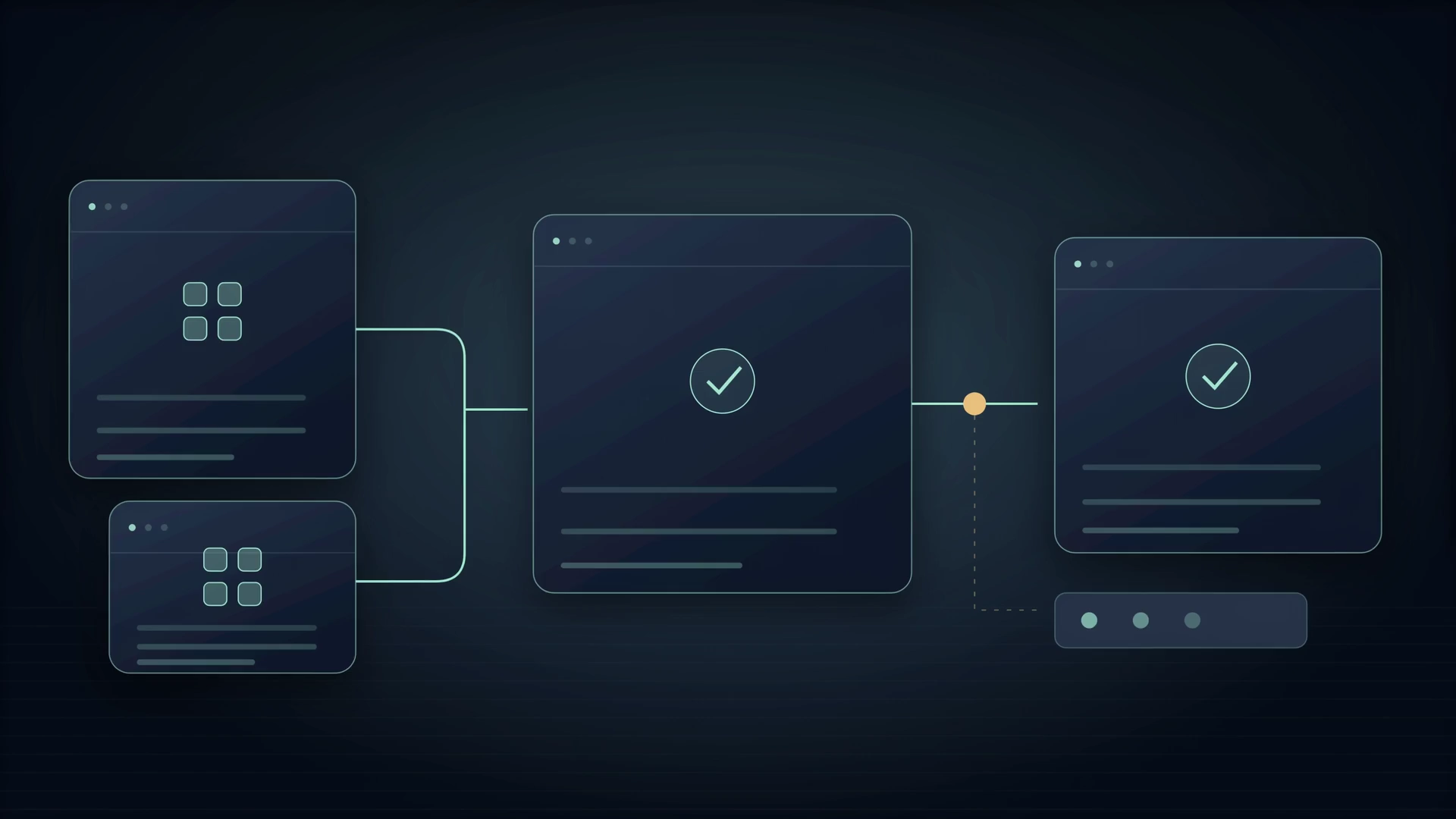
INTERACTIVE WORKFLOWIllustrative engineering scenario
01 / 03
Understand the request
Read the request, retrieve the relevant context and prepare a structured task for the agreed workflow.
Message, form or business eventA structured task with required fields
Read the complete workflow
Understand the request
Read the request, retrieve the relevant context and prepare a structured task for the agreed workflow.
Message, form or business event → A structured task with required fields
Check and approve
Validate the details and permitted actions. Route exceptions and sensitive decisions to the accountable person.
Task + business rules + permissions → Approved action or a review request
Update the system
Write through a configured integration, check the response and retain an action record. A failed update stays visible.
Authorized action → Confirmed system response + audit trail
Document review to ERP or finance update
Operational exception to accountable resolution
FROM INPUT TO USEFUL OUTPUT
Follow the work. Inspect the result.
Explore a proposed delivery workflow. Each step connects an activity to something your team can review.
WORKFLOW BLUEPRINTIllustrative delivery design
INPUTS TO DEFINE
A documented trigger and desired result
API access, sandbox and system owners
Approval rules and exception responsibilities
REVIEWABLE OUTPUT
A validated task with source context
Accept a defined trigger from a form, message or system. Validate the input and identify the task without granting unrestricted system access.
Reviewed against agreed requirementsWHAT WE DEFINE AND DELIVER
Practical artifacts. A shared definition of done.
The exact scope follows discovery. These are the building blocks we discuss, specify and review together.
- Agent tools, workflows and system actions
- CRM, ERP, helpdesk, finance and HR integration
- Custom APIs, data flows and legacy connections
- Approval routing, exceptions and audit trails
HOW THE PIECES CONNECT
Architecture with your operation in mind.
Trigger → orchestration → scoped tools → approval → system action → receipt. Integration contracts, idempotency, retries and observability matter as much as the AI step.
Designed around real constraints.
- A configured integration is verified against its actual destination; a simulated success is not delivery evidence.
- Sensitive business actions require agreed authority, controls and review; universal plug-and-play connectivity is not assumed.
FIND THE RIGHT STARTING POINT
A product where it fits. A custom build where it matters.
Use deterministic rules for predictable work, AI for the bounded interpretation task, and people at the decisions that need judgment.
Bring your objective and the people it should help. We will shape a first scope and the evidence needed to move forward.
Discuss this projectYour starting point is carried into an editable inquiry. Nothing is booked or provisioned by making this selection.A CLEAR PATH THROUGH DELIVERY
One plan. Visible progress.
A complete build, a focused integration or specialists alongside your team. The engagement follows the scope—not a fixed team template.
- 01
Discover
Define users, the process, constraints and a useful first measure of success.
- 02
Design
Make the interface, architecture, data and integration decisions visible.
- 03
Build & evaluate
Deliver working increments and test the task, permissions and difficult cases.
- 04
Release & evolve
Agree rollout, recovery, handover and the people responsible for ongoing operation.
BEFORE YOU START
Good questions. Clear answers.
Can you connect our current CRM or ERP?
We assess the vendor API, available permissions and target workflow first. The result may be configuration, a custom connector or a phased integration.
What happens when an action fails?
The scope defines retries, exception queues, an accountable owner and how the user sees the unresolved state. That behaviour is tested before release.
LET’S MAKE THE NEXT STEP USEFUL
Tell us what needs to work better.
Talk with our team
Explore with our AI guide, or reach the people who can scope the work.