
Blockchain & digital trust
A shared record. Clear responsibilities.
Design shared-ledger systems for organisations that need to coordinate records and transactions across boundaries. We scope participants, permissioning, network operations and integration with existing business systems before choosing a ledger architecture.
SEE HOW THE TECHNOLOGY WORKS
A shared record. A clear chain of responsibility.
See where signatures and shared records fit into a real enterprise workflow.
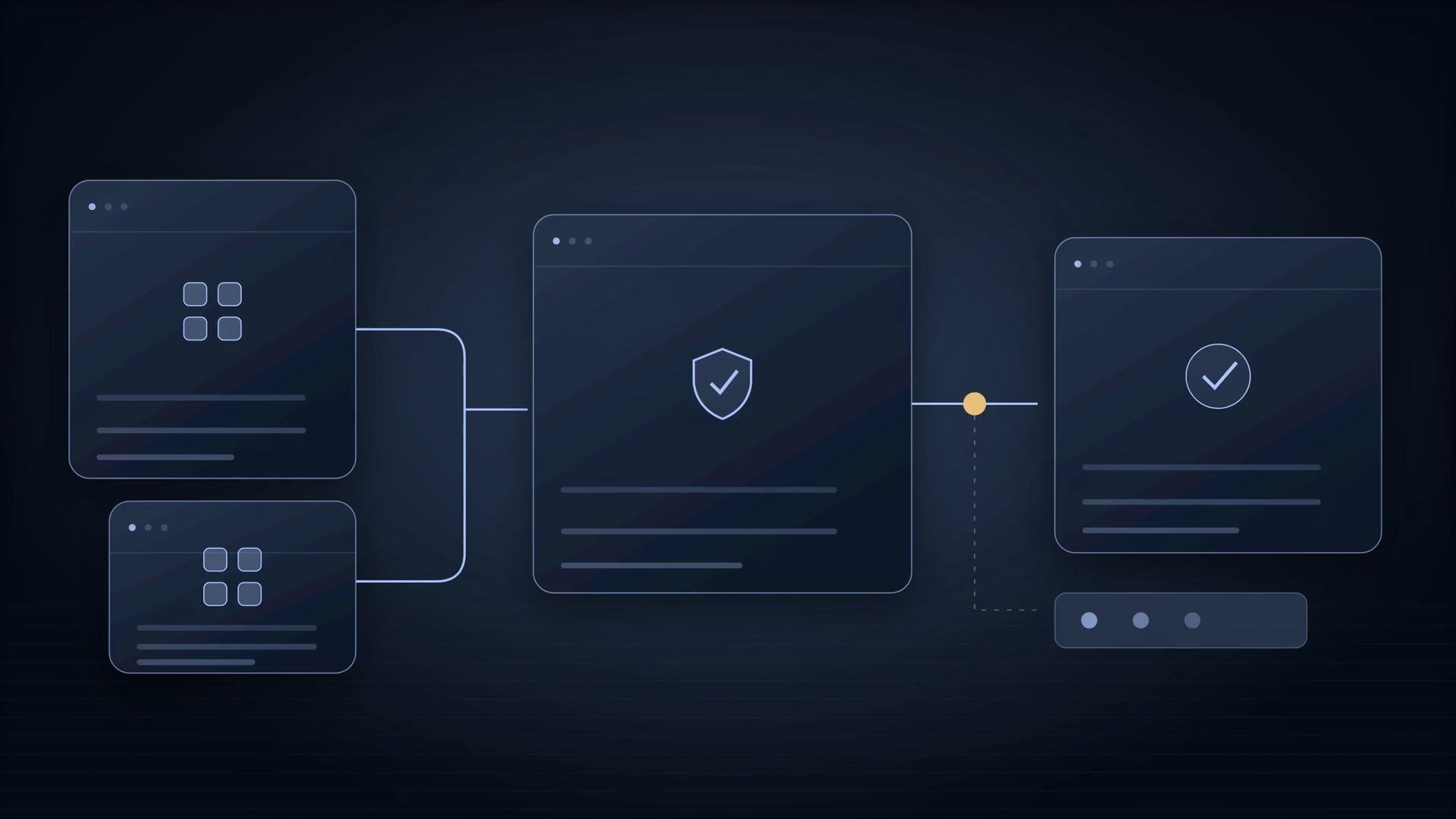
INTERACTIVE WORKFLOWIllustrative engineering scenario
01 / 03
Establish the source
Define who supplies the record, what the source system verifies and who is allowed to sign.
A business record and identified issuerAn authorized signed assertion
Read the complete workflow
Establish the source
Define who supplies the record, what the source system verifies and who is allowed to sign.
A business record and identified issuer → An authorized signed assertion
Coordinate participants
Agree the participant permissions, validation rules and correction process before selecting the network design.
Signed record + network rules → A consistent shared event history
Connect the workflow
Connect records to enterprise systems and make the audit trail inspectable. A ledger records a claim; it does not independently prove the physical event.
Recorded event + integration scope → Traceable system updates
Partner networks with controlled participation
Shared records connected to enterprise platforms
FROM INPUT TO USEFUL OUTPUT
Follow the work. Inspect the result.
Explore a proposed delivery workflow. Each step connects an activity to something your team can review.
WORKFLOW BLUEPRINTIllustrative delivery design
INPUTS TO DEFINE
Participant roles and trust requirements
Transaction rules and confidentiality needs
Identity, hosting and enterprise interfaces
REVIEWABLE OUTPUT
A participation and permission model
Map organisations, identities, permitted transactions and confidentiality boundaries. Specify how new participants join and existing access is removed.
Reviewed against agreed requirementsWHAT WE DEFINE AND DELIVER
Practical artifacts. A shared definition of done.
The exact scope follows discovery. These are the building blocks we discuss, specify and review together.
- Participant and governance model
- Permissioned network architecture
- Business-system and identity integration
- Network operation and recovery design
HOW THE PIECES CONNECT
Architecture with your operation in mind.
Participant applications → permissioned identity → transaction/ledger services → private records and enterprise integrations. Network choice follows the governance and operating requirements.
Designed around real constraints.
- Permissioning does not remove key-management, confidentiality or operating responsibilities.
- A shared ledger is not automatically the right answer; a central platform may meet the same need more simply.
FIND THE RIGHT STARTING POINT
A product where it fits. A custom build where it matters.
Define who may participate, what they can see and how the network is governed before selecting the technology.
Bring your objective and the people it should help. We will shape a first scope and the evidence needed to move forward.
Discuss this projectYour starting point is carried into an editable inquiry. Nothing is booked or provisioned by making this selection.A CLEAR PATH THROUGH DELIVERY
One plan. Visible progress.
A complete build, a focused integration or specialists alongside your team. The engagement follows the scope—not a fixed team template.
- 01
Discover
Define users, the process, constraints and a useful first measure of success.
- 02
Design
Make the interface, architecture, data and integration decisions visible.
- 03
Build & evaluate
Deliver working increments and test the task, permissions and difficult cases.
- 04
Release & evolve
Agree rollout, recovery, handover and the people responsible for ongoing operation.
BEFORE YOU START
Good questions. Clear answers.
Who operates the network?
The design specifies the organisations responsible for nodes, identity, updates and incident response. Operation is an agreed service responsibility.
Can different participants see different information?
The architecture can separate shared state, private data and role-specific interfaces. The exact privacy model is evaluated for the selected platform.
LET’S MAKE THE NEXT STEP USEFUL
Tell us what needs to work better.
Talk with our team
Explore with our AI guide, or reach the people who can scope the work.