
AI & connected operations
From shipment documents to a reviewed declaration.
Build customs management software for brokers, importers and trade operations. Connect shipment documents, AI-assisted extraction, classification research, declaration preparation and status tracking, with accountable people reviewing the decisions that affect clearance.
SEE HOW THE TECHNOLOGY WORKS
From request to a controlled action.
See how an agent can work with business systems while keeping permissions and people in the loop.
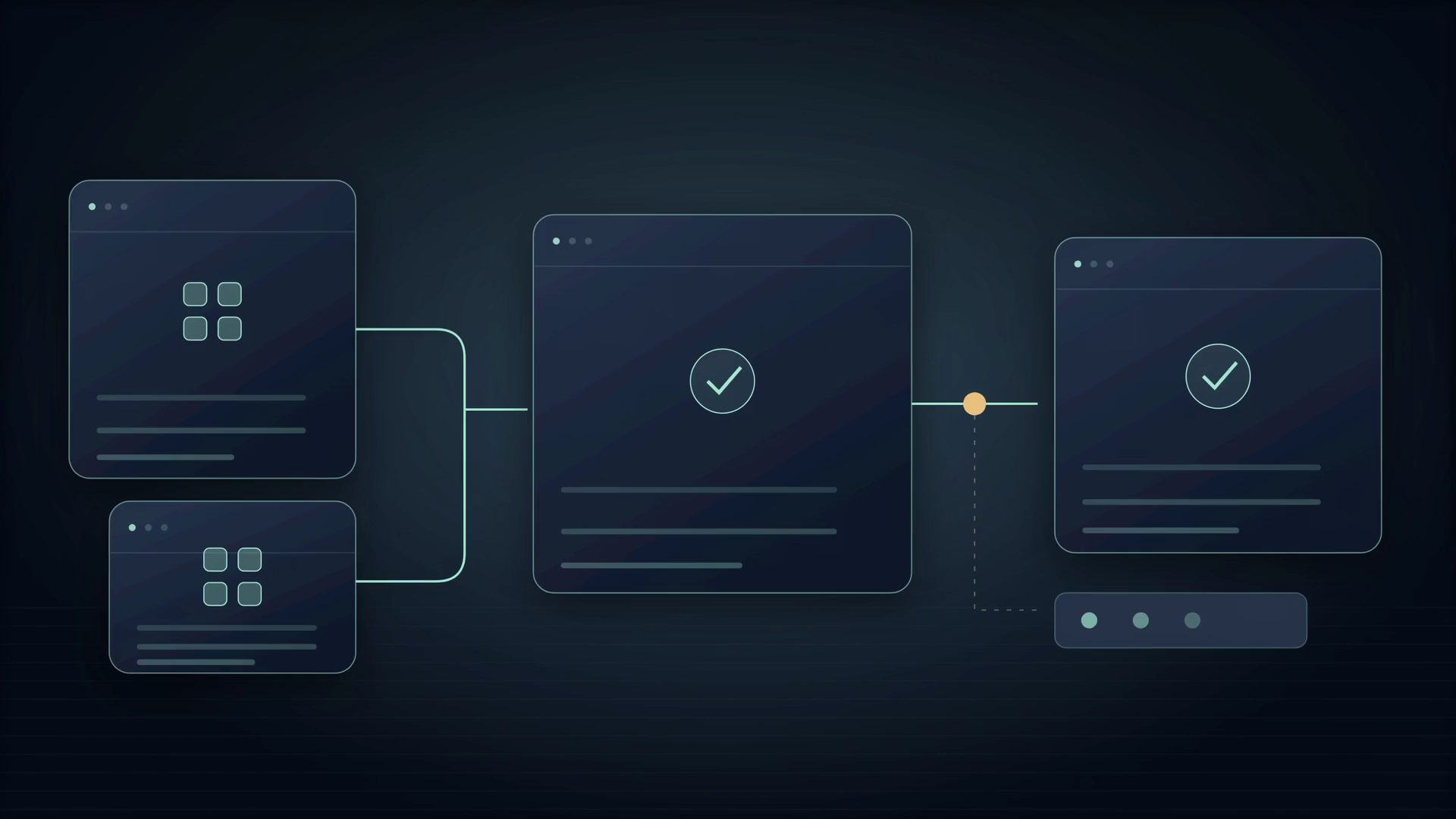
INTERACTIVE WORKFLOWIllustrative engineering scenario
01 / 03
Understand the request
Read the request, retrieve the relevant context and prepare a structured task for the agreed workflow.
Message, form or business eventA structured task with required fields
Read the complete workflow
Understand the request
Read the request, retrieve the relevant context and prepare a structured task for the agreed workflow.
Message, form or business event → A structured task with required fields
Check and approve
Validate the details and permitted actions. Route exceptions and sensitive decisions to the accountable person.
Task + business rules + permissions → Approved action or a review request
Update the system
Write through a configured integration, check the response and retain an action record. A failed update stays visible.
Authorized action → Confirmed system response + audit trail
HS-code research and classification review
Declaration drafting and missing-document follow-up
Origin, tariff and landed-cost working papers
Importer updates and broker exception queues
Post-clearance audit and evidence retrieval
FROM INPUT TO USEFUL OUTPUT
Follow the work. Inspect the result.
Explore a proposed delivery workflow. Each step connects an activity to something your team can review.
WORKFLOW BLUEPRINTIllustrative delivery design
INPUTS TO DEFINE
Redacted shipment documents and current review steps
Trade lanes, tariff sources and classification owners
Broker, ERP or authority access and retention requirements
REVIEWABLE OUTPUT
A shipment record with traceable fields and an exception list
Ingest the agreed invoice, packing list, manifest and supporting documents from upload, email or approved interfaces. Extract fields with source references, compare quantities and values, and flag missing or conflicting information for the broker or importer.
Reviewed against agreed requirementsWHAT WE DEFINE AND DELIVER
Practical artifacts. A shared definition of done.
The exact scope follows discovery. These are the building blocks we discuss, specify and review together.
- Invoice, packing-list and manifest intake with source-linked fields
- HS-code research assistance and reviewer work queues
- Declaration drafts, validation rules and missing-document checks
- Tariff, origin and landed-cost inputs from approved sources
- Broker, ERP and authority-system interfaces where access is approved
- Importer status, exception ownership and post-clearance evidence
HOW THE PIECES CONNECT
Architecture with your operation in mind.
Shipment documents → extraction and cross-document checks → source-backed classification assistance → human review → approved submission interface → status, exception and audit records. AI proposes and organises; authorised people and external systems determine filing acceptance and clearance.
Designed around real constraints.
- AI suggestions are not binding tariff rulings, legal advice or clearance decisions. A qualified reviewer owns classification, origin, valuation and restricted-goods decisions.
- Authority-system integration depends on documented interfaces, approved credentials and the relevant access agreements. No deployment at a named customs authority or guaranteed clearance speed is implied.
FIND THE RIGHT STARTING POINT
A product where it fits. A custom build where it matters.
Start with one document flow or trade lane. Connect AI assistance to the people, source rules and systems that decide what can be filed or cleared.
Bring your objective and the people it should help. We will shape a first scope and the evidence needed to move forward.
Discuss this projectYour starting point is carried into an editable inquiry. Nothing is booked or provisioned by making this selection.A CLEAR PATH THROUGH DELIVERY
One plan. Visible progress.
A complete build, a focused integration or specialists alongside your team. The engagement follows the scope—not a fixed team template.
- 01
Discover
Define users, the process, constraints and a useful first measure of success.
- 02
Design
Make the interface, architecture, data and integration decisions visible.
- 03
Build & evaluate
Deliver working increments and test the task, permissions and difficult cases.
- 04
Release & evolve
Agree rollout, recovery, handover and the people responsible for ongoing operation.
BEFORE YOU START
Good questions. Clear answers.
Is this a replacement for our customs broker?
No. It is software for document preparation, review and coordination. Your broker or authorised trade specialist remains responsible for the decisions and submissions assigned to them.
Can AI classify HS codes automatically?
It can assist research using product details and approved references, surface candidate classifications and organise the evidence. Ambiguous cases go to a reviewer, and the final classification must follow the applicable rules and responsible authority.
Can it connect to our existing customs or ERP system?
We assess the available API, file exchange or approved integration method with your team. Access, supported transactions, acknowledgements and retry handling are verified before an automated submission is included in scope.
How can importers get updates without chasing the broker?
A portal or configured Echo conversation can explain recorded status, request missing documents and route exceptions to the right team. It should distinguish a submitted request from authority acceptance or confirmed clearance.
How do we start a customs workflow project?
Choose one document family or trade lane, provide redacted examples and identify the reviewers and downstream systems. We define a pilot around extraction quality, review effort, exception handling and a traceable handoff rather than an assumed clearance target.
LET’S MAKE THE NEXT STEP USEFUL
Tell us what needs to work better.
Talk with our team
Explore with our AI guide, or reach the people who can scope the work.